
Thailand Travel Guide: Where to Go, What to Do & How to Plan Your Trip
Thailand can shift from Bangkok’s river temples and late-night food stalls to Chiang Mai’s mountain views, then finish with a few slower days beside the Andaman Sea. The challenge is not finding places to visit—it is choosing a route that does not turn your holiday into a chain of transfers.
This guide gives first-time visitors a practical starting point for where to go, how long to stay and how to connect the main stops.

Disclosure: This article contains affiliate links. If you book through them, we may earn a small commission at no extra cost to you.
In This Guide
Thailand Travel Guide at a Glance
- Best time for many first-time visitors: November to February, when much of the country is generally cooler and drier. Weather varies by region and island coast.
- Recommended trip length: 10–14 days for a first trip covering Bangkok, the north and a beach destination.
- Currency: Thai baht (THB).
- Best for: food, culture, beaches, nightlife, temples, markets and easy multi-stop trips.
- Getting around: domestic flights, trains, buses, ferries, ride-hailing and private transfers.
- Budget: Thailand can suit budget, mid-range and luxury travelers; islands and resort areas usually cost more than northern cities. See our Thailand Trip Cost guide for planning ranges.
When Is the Best Time to Visit Thailand?
For a classic first trip, November through February is often the easiest period to plan because temperatures are generally more comfortable and rainfall is lower in many popular areas. However, it is also one of the busiest periods, so flights, beach hotels and popular tours can cost more.
March to May is hotter, while wetter months bring greener scenery and periods of heavy rain. On the Andaman coast, including Phuket and Krabi, the wetter monsoon period generally runs from May to October, although conditions vary from week to week. The Gulf follows a different pattern, so compare conditions with destinations such as Koh Samui before fixing your beach stay. Travelers considering Chiang Mai in the late dry season should also check current air-quality conditions.
Booking tip: If your dates are flexible, compare fares before fixing your itinerary. Compare flights to Thailand.
Thailand Itinerary: 7, 10 or 14 Days
7 days: Choose two bases: Bangkok + Chiang Mai for culture and the north, or Bangkok + Phuket/Krabi for city and beach time.
10 days: Bangkok (3 nights) → Chiang Mai (3 nights) → Phuket or Krabi (3 nights).
14 days: Keep the same three-base route, then add slower days, an Ayutthaya day trip or more beach time rather than another long transfer.
These are starting points, not rules. For a day-by-day plan, use our Thailand itinerary for 7, 10 and 14 days.
Where to Go in Thailand
Bangkok: Temples, Markets, Food and Big-City Energy
Bangkok feels busiest at street level—river boats, food stalls, temple courtyards and modern shopping districts can all share the same day.
A practical first-day route links the Grand Palace and Wat Phra Kaew, Wat Pho and Wat Arun; allow most of a day if you want to visit all three without rushing. Choose one different side of the city for your next day: Chinatown and its evening food scene, a canal or river trip, a market, or a modern neighborhood along the BTS. At temples, wear clothing that covers shoulders and knees and check the site’s current visitor rules.
Read our full guide: Best Things to Do in Bangkok.

If you prefer a guided visit:
Chiang Mai: Culture, Mountains and a Slower Pace
Chiang Mai changes the pace after Bangkok. Inside the Old City, temple courtyards, markets and cafés are close enough for an unhurried day; outside it, the road quickly climbs toward mountain viewpoints and cooler landscapes.
Use Wat Phra Singh and Wat Chedi Luang for an Old City day, Doi Suthep for a shorter mountain outing, and Doi Inthanon when you want a longer nature-focused day. Yi Peng is a seasonal lantern festival, not a nightly attraction; its dates shift each year, so verify the official schedule before planning around it. A cooking class or guided temple visit can add context without filling every day with tours.

If you want transport and historical context included, compare Chiang Mai temple and mountain experiences.
Phuket or Krabi: Which Beach Base Should You Choose?
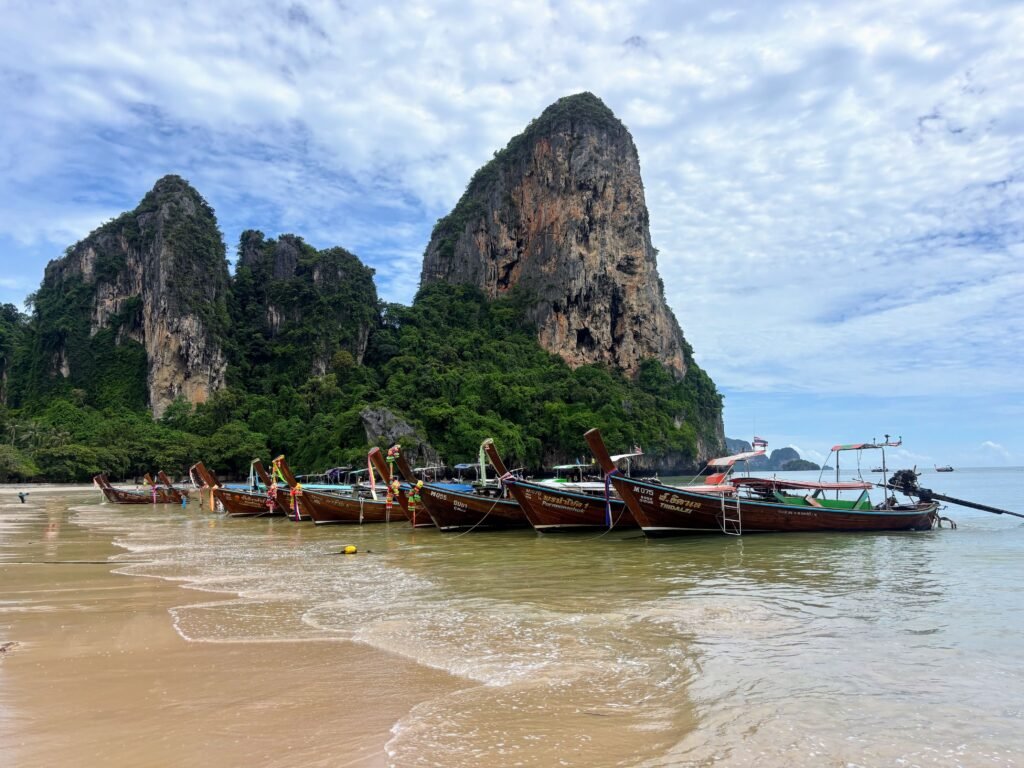
Phuket works best when you want the widest hotel choice, nightlife, restaurants and straightforward tour logistics. Krabi feels smaller and more scenic, with Ao Nang as a practical base and Railay reached by boat.
You do not need both on a short trip. Pick one base and use boat trips for the surrounding islands, remembering that famous stops such as Phi Phi and James Bond Island can feel crowded at peak times. If the Andaman forecast looks poor for your dates, compare conditions with the Gulf coast before committing.
Still deciding? Our detailed Phuket vs Krabi comparison covers beaches, nightlife, scenery, costs and which destination suits each travel style.
For these popular trips, compare departure points, group sizes and timings before booking:
Ayutthaya and Sukhothai: Thailand’s Historic Capitals
If you want history beyond Bangkok’s temples, add Ayutthaya or Sukhothai. Ayutthaya is easier to visit as a day trip from Bangkok, while Sukhothai works better as a dedicated stop for travelers moving through central or northern Thailand.
Both offer temple ruins and a slower pace. However, you do not need both on a first 10-day itinerary.

Moving Between the Main Stops
Bangkok → Chiang Mai: Fly when time matters, or choose an overnight train when the journey itself appeals to you. Sleeper berths are worth checking early in busy periods.
Chiang Mai → Phuket or Krabi: Flying is normally the practical choice because an overland journey takes a large part of the trip.
Between beach areas and islands: Ferries, shared vans and transfers vary by route and season. Confirm the full door-to-door journey rather than comparing only the advertised boat time.
Once your dates are fixed, use 12Go to compare live train, bus, ferry and transfer schedules, and check SRT directly for sleeper-train availability.
How to Get Around Thailand
Within cities, ride-hailing, taxis, public transport and local options such as songthaews are common. Grab and Bolt are two useful ride-hailing apps to have installed; comparing both can help with availability and price. In Bangkok, BTS Skytrain and MRT are usually better than sitting in road traffic for many central journeys. On islands and in rural areas, a rental car can offer more flexibility if you are comfortable driving locally and have the required license and insurance.
For long-distance train travel, you can also check the State Railway of Thailand (SRT) official D-Ticket system. Popular sleeper berths can sell out during busy periods, so it is worth checking early once your route is fixed.
If driving fits your route:
Where to Stay and Practical Planning
Where Should First-Time Visitors Stay?
Your base can make a big difference to how easy the trip feels. In Bangkok, staying close to BTS or MRT is usually more useful than choosing a hotel only by price. In Chiang Mai, the Old City is convenient for temples and sightseeing, while Nimman is popular for cafés and a more modern neighborhood feel. In Phuket, Patong suits travelers who want nightlife and activity, while Kata or Karon are generally better for a more relaxed beach stay. In Krabi, Ao Nang is the easiest all-round base for restaurants, boat trips and transfers.
Money and Payments
Thailand uses the Thai baht (THB). Cards are common in hotels, malls and larger businesses, but cash is still useful for markets, small restaurants, local transport and some smaller attractions.
Mobile data is easy to arrange through local SIM cards or an eSIM. Having data on arrival makes maps, ride-hailing, translation and bookings much easier.
Entry Requirements
Entry rules depend on nationality and can change. Thailand introduced revised visa-exemption categories on 15 September 2026. Under the current framework, passport holders from 60 countries and territories may receive up to 30 visa-free days, but travelers should verify the rule for their passport through official Thai immigration, consular or e-Visa channels.
Foreign visitors must also complete the free Thailand Digital Arrival Card (TDAC) online within the three days before arrival. Use the official immigration website and avoid look-alike paid services.
Stay connected: Check Thailand eSIM options.
Practical Tips for First-Time Visitors
- Leave breathing room for heat, traffic and weather instead of scheduling every hour.
- Use official or well-reviewed transport and confirm prices when fares are not metered.
- Before driving a scooter or car, confirm that your licence, insurance and the vehicle meet local legal requirements.
- Reserve long-distance transport, popular island trips and peak-season accommodation once your route is fixed; keep ordinary city days flexible.
Also Read
Frequently Asked Questions
Is Thailand good for first-time visitors to Southeast Asia?
Yes. Thailand has a wide tourism network, frequent transport connections and a large choice of accommodation, tours and restaurants, which makes multi-stop trips relatively easy to organize.
Should I choose Phuket or Krabi?
Choose Phuket if you want the widest hotel choice, nightlife and tour infrastructure. Choose Krabi if you prefer dramatic scenery, a smaller base and easy access to Railay and nearby islands.
How much time should I spend in Bangkok?
For a first visit, three full days is a useful starting point. Add another day if you want a floating market, Ayutthaya or a slower pace.
Do I need to book Thailand tours in advance?
Not everything needs advance booking. However, popular island trips, major attractions and peak-season activities are worth reserving early if your schedule is fixed.
Final Thoughts
A strong first route combines Bangkok, northern Thailand and one beach destination—three distinct sides of the country without making transfers the focus of the trip.
Choose your trip length first, then use the detailed Thailand itinerary to turn those bases into a day-by-day plan.