7 Days in Cambodia: Phnom Penh & Siem Reap Itinerary

This article contains affiliate links. If you book through them, we may earn a small commission at no extra cost to you.
The temptation with seven days in Cambodia is to keep adding places. Angkor, Phnom Penh, perhaps an island, perhaps another city along the way. I’d give the week to Phnom Penh and Siem Reap: enough contrast to feel like a trip, with time to enjoy the places you came for.
This route counts arrival on day one and departure on day seven, with six hotel nights and a proper transfer day. At the end, an automatic route planner lets you choose your arrival city, departure plan and one or two Angkor days, then generates your seven-day route. Read the guide first to understand the choices.
Quick summary
Spend 3 nights in Phnom Penh + 3 nights in Siem Reap. Use the capital for the Royal Palace, local food and modern history; give Siem Reap your Angkor days and a relaxed evening in town.
Travel between them on day 4. Arriving in one city and flying out of the other avoids a second long transfer. If you must return to your arrival airport, use the alternative below and accept less sightseeing.
In this guide
Choose the route before booking flights
Your seven days at a glance
Days 1–3: Phnom Penh
Day 4: travel to Siem Reap
Days 5–6: Angkor and Siem Reap
Day 7: departure
Which Angkor Pass fits this week?
If you fly home from the same city
Where to stay and what to arrange
Have more than a week?
Build your seven-day route
Choose the route before booking flights
The plan below runs Phnom Penh → Siem Reap. You can reverse the two city blocks if your flights work better that way. Keep the arrival and departure days light in either direction.
Check the airport codes: Techo International Airport (KTI) serves Phnom Penh, and Siem Reap–Angkor International Airport (SAI) serves Siem Reap. Neither airport transfer belongs inside your sightseeing time by default.
Before buying a return ticket, compare flying into one city and out of the other. Select Multi-city and compare a flight into KTI and a flight home from SAI, or reverse the airports if that works better. Add baggage and ground transfers to the comparison. A cheaper return fare can lose its advantage once you add another long journey and a hotel night in the wrong city.
Your seven days at a glance
| Day | Plan | Sleep in |
|---|---|---|
| 1 | Arrive; easy riverfront evening if time allows | Phnom Penh |
| 2 | Royal Palace area, a market and Khmer food | Phnom Penh |
| 3 | Tuol Sleng; optional Choeung Ek visit | Phnom Penh |
| 4 | Travel to Siem Reap, then check in and rest | Siem Reap |
| 5 | Angkor Wat, Bayon and Ta Prohm | Siem Reap |
| 6 | A second Angkor day or a slower town day | Siem Reap |
| 7 | Departure around your flight time | No hotel night counted |
| Day & overnight | Plan |
|---|---|
| Day 1Sleep in: Phnom Penh | Arrive; easy riverfront evening if time allows |
| Day 2Sleep in: Phnom Penh | Royal Palace area, a market and Khmer food |
| Day 3Sleep in: Phnom Penh | Tuol Sleng; optional Choeung Ek visit |
| Day 4Sleep in: Siem Reap | Travel to Siem Reap, then check in and rest |
| Day 5Sleep in: Siem Reap | Angkor Wat, Bayon and Ta Prohm |
| Day 6Sleep in: Siem Reap | A second Angkor day or a slower town day |
| Day 7Sleep in: No hotel night counted | Departure around your flight time |
That is 7 days and 6 nights: 3 + 3. You get four full sightseeing days—two in each city—with arrival, the intercity journey and departure accounted for separately.
Days 1–3: settle into Phnom Penh

Day 1: arrive and keep the evening easy
Get to your hotel, eat something and see how much energy is left. If you arrive with daylight to spare, a walk near the riverfront gives you a gentle first look at the capital: food stalls, people meeting outside and the palace roofs nearby. A late arrival needs no sightseeing recovery mission.
If you’re arriving with luggage, compare private rides from Techo Airport (KTI) to your hotel. Enter your hotel and flight arrival time, then check the vehicle’s luggage capacity. The airport’s public-bus guide explains its city route and stops; check whether the final stop is useful for your hotel, before you decide.
If you want to walk to the waterfront after checking in, compare hotels near Phnom Penh’s Royal Palace on Trip.com. Set your own dates and guest count, then check the walking route on the map.
Day 2: the palace, a market and time for lunch
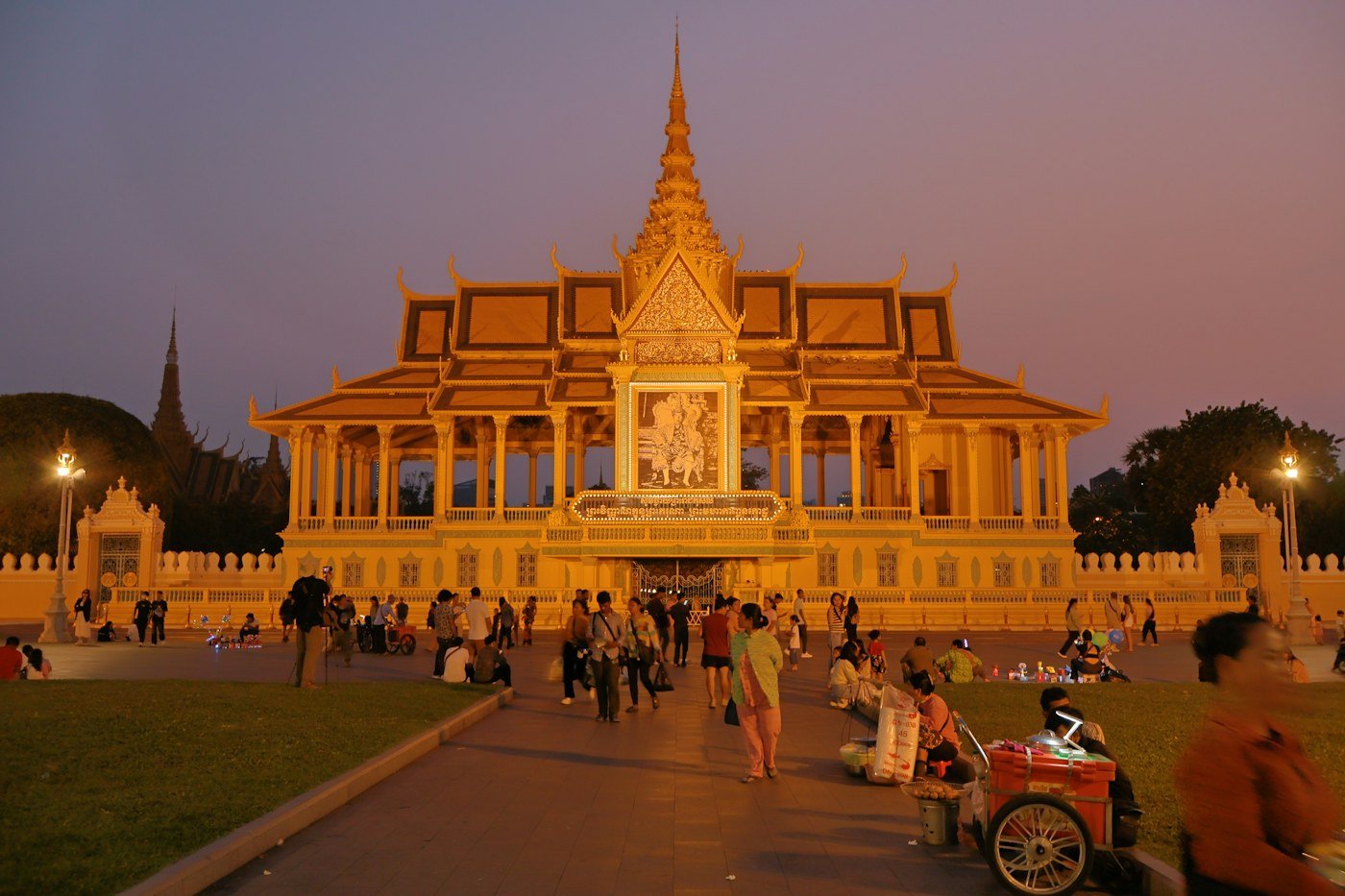
Start around the Royal Palace and Silver Pagoda, the ceremonial royal complex and its temple grounds. Check visitor access before going, as this is a working royal site. Wear clothes that cover your shoulders and knees.
Then choose what interests you. The National Museum adds Khmer sculpture and historical context; Central Market, beneath its yellow Art Deco dome, gives the day a different pace. I wouldn’t turn both into compulsory stops.
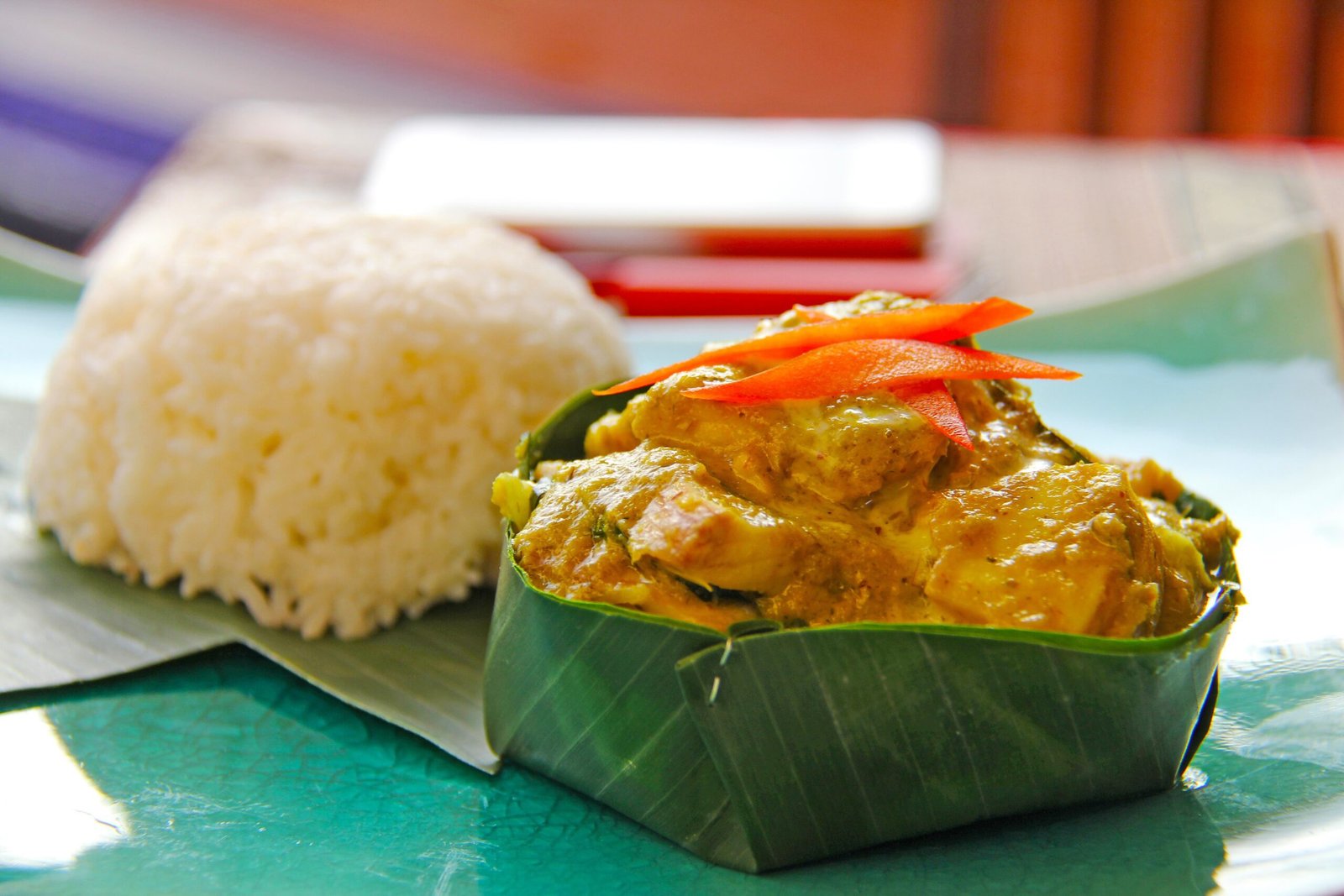
Make time for fish amok, one of Cambodia’s best-known dishes: fish steamed with coconut milk and a fragrant Khmer herb paste, often in a banana-leaf cup. I tried it and found it delicious—it’s a dish I’d recommend trying while you’re here.
Lunch is worth leaving unplanned for a little while. Pick somewhere that appeals to you, sit down and enjoy the food rather than eating on the way to another sight.
For the evening, choose dinner by the river or a bar around your hotel. Phnom Penh has lively nightlife, but an early night is also a perfectly good way to spend your second evening.
Day 3: make room for Cambodia’s recent history
Before visiting these sites, take a little time to learn what happened. From 1975 to 1979, the Khmer Rouge regime led by Pol Pot emptied cities and forced people into brutal labour. Around 1.7 million people died in less than four years, through executions, starvation, disease and overwork. Knowing that background helps you understand why these visits matter, beyond the buildings and memorials.
Tuol Sleng Genocide Museum preserves the former S-21 prison of the Khmer Rouge. It is a place for listening and reflection, not a quick stop between shopping and cocktails. The museum’s visitor information currently lists daily opening from 8am to 5pm and adult admission at $5; guided interpretation or an audio guide should be checked separately.
Choeung Ek, the memorial at a former execution site outside the centre, can be a second visit if you want that fuller context. Arrange transport and allow the day to breathe. You can also choose one site and keep the afternoon quiet. Both places can be emotionally difficult; there is no benefit in forcing yourself through more than you want to take in.
If you’d rather arrange the two visits together, compare a half-day S21 and Killing Fields tuk-tuk tour with hotel pickup. Choose the With Guide package if you want someone to explain the history as well as handle the route; the same listing also has a transport-only option. Check the guide language, pickup area and whether admission or audio guides cost extra before booking.
By evening, have tomorrow’s bus or car arranged and check where you need to board. A calm dinner is enough of a plan.
Day 4: travel from Phnom Penh to Siem Reap
I’d use a daytime journey for this route and let it be the main event of the day. Allow roughly six hours on the road as a planning estimate, then add boarding, stops, traffic and the rides to and from your hotels. Check the timing and boarding point for the service you book.
From my experience travelling by road in Cambodia, looking out at the countryside is part of the pleasure. Some stretches are narrow, and distances that look modest on a map can take longer than you expect. I’d leave that time in the plan rather than treat the journey as lost sightseeing.
Daytime bus. Compare daytime Giant Ibis seats from Phnom Penh to Siem Reap. Check the fare per person and both terminals for your date, then allow for a ride between each terminal and your hotel.
Private car. For several people, compare the total for a private transfer between Phnom Penh and Siem Reap on Trip.com with bus seats plus the rides at each end. Door-to-door travel can make luggage and pickup simpler. Before paying, compare private-taxi options on 12Go for the same date, passenger count and pickup points. Confirm the direction, vehicle capacity, hotel coverage and any charges; sightseeing stops and waiting time need a separate agreement.
A flight can help if its timing works, but add both airport transfers and check-in time. You also miss the countryside unfolding along the road. An overnight bus changes the hotel-night count and may leave you arriving tired before check-in; it is an alternative itinerary, not an automatic saving inside this six-night plan.
Reaching Siem Reap, checking in and finding dinner is enough for day four. Sort out your Angkor ticket and next morning’s transport; if you want sunrise, do the preparation before bed.
For restaurants within walking distance and a quieter night, compare stays around Wat Bo in Siem Reap on Trip.com. Set your own dates and guest count, then check the map and recent reviews for street noise.
Days 5–6: Angkor, with room to enjoy it
Day 5: give the main temples a proper day
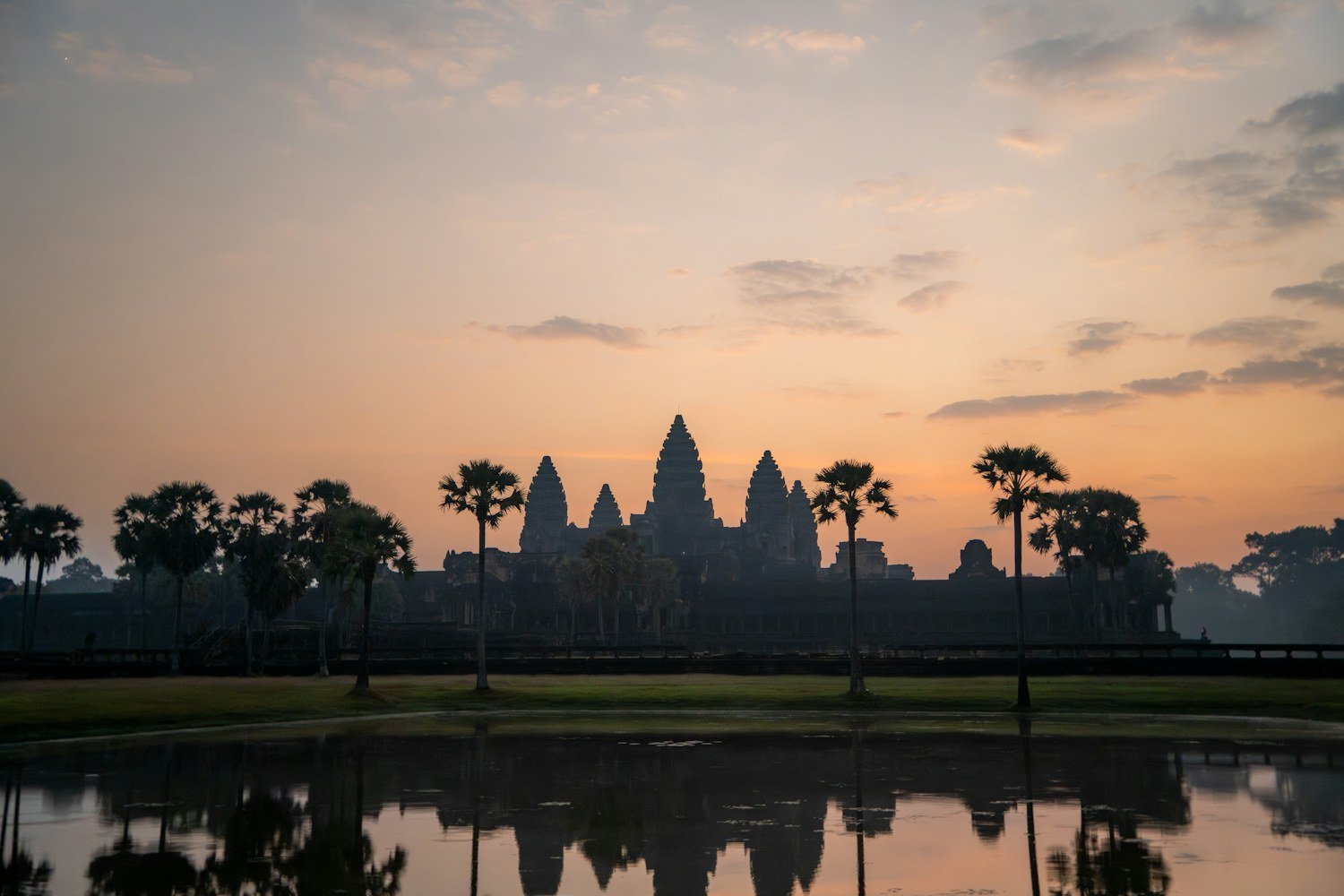
Start with Angkor Wat, the world’s largest religious monument, covering about 163 hectares. Its towers are the familiar image, but the galleries and carved stories deserve time too. Angkor Wat is one temple complex within the much wider Angkor archaeological area.
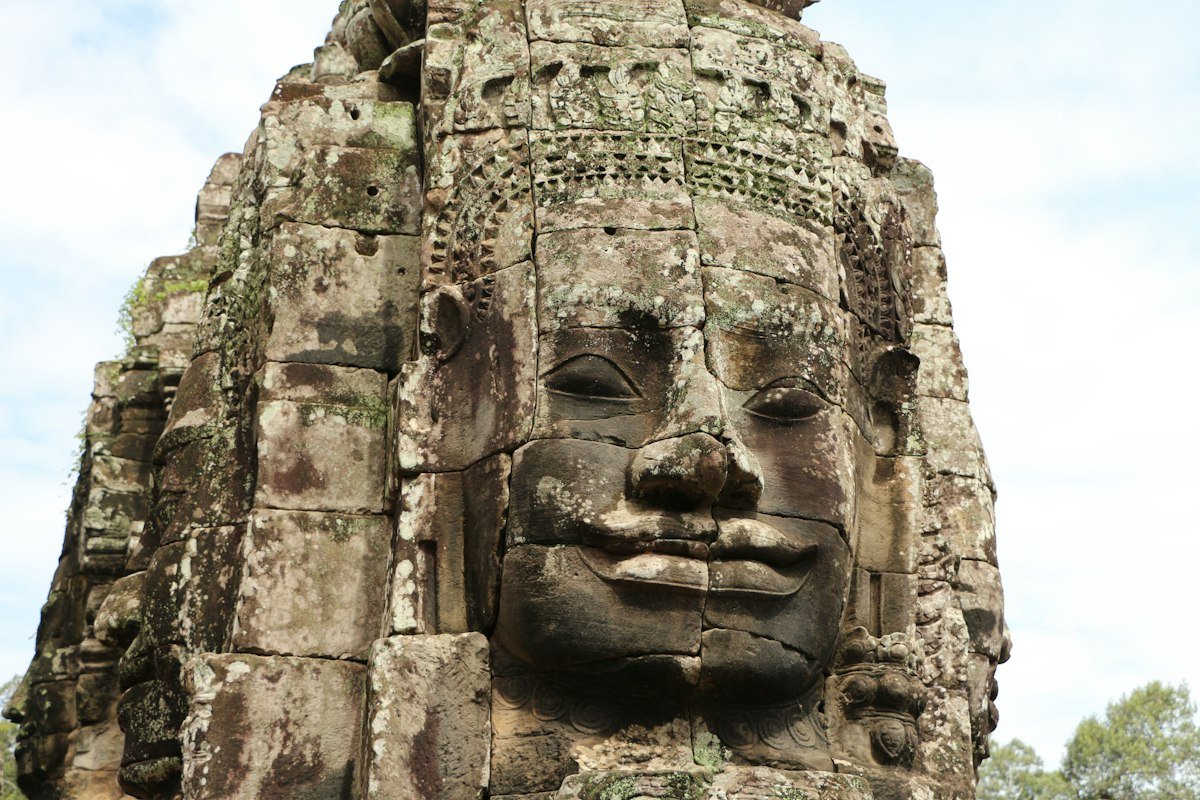
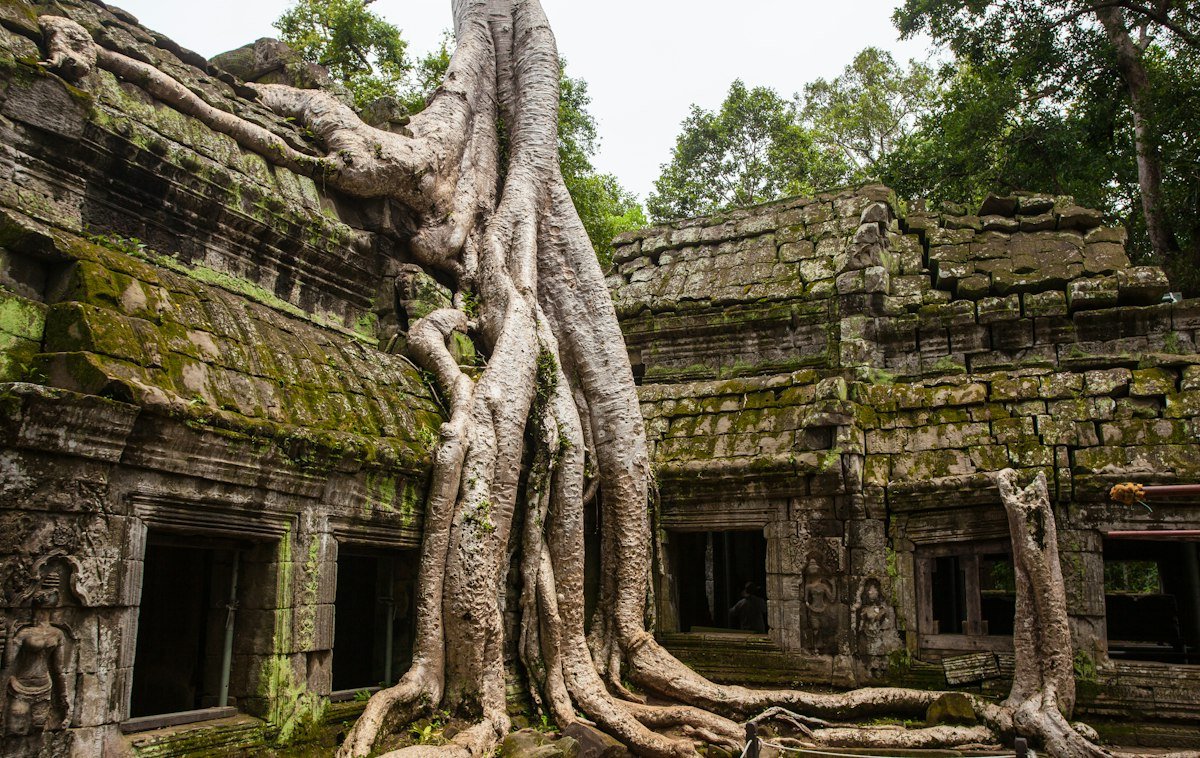
Pair it with Bayon, whose towers carry huge stone faces inside the old city of Angkor Thom, and Ta Prohm, where roots grow over the stone walls. Ta Prohm was also a filming location for Lara Croft: Tomb Raider (2001), starring Angelina Jolie—the tangled trees may look familiar even if you’ve never been to Cambodia.


What struck me at Angkor was its scale. I’d strongly recommend a guide for a first visit. It’s easy to spend the day moving between impressive buildings without understanding their stories or how the sites fit together. I had a guide and still wished I’d learned more of the history beforehand.
To make the route and explanations easier, compare a small-group Angkor day with a guide. Select the Join-in option and hotel pickup if you need it, then check the guide’s language, group size, covered temples and whether the Angkor Pass is included. A driver gets you between sites; a guide explains what you’re looking at. Check that the package provides both if that is what you need.
You can visit independently, but I’d arrange transport and read up on the temples first. Sunrise is optional: if you choose the early pickup, arrange breakfast and leave room for a rest instead of planning nonstop sightseeing until sunset.
You may spot monkeys around Angkor, which can be lovely to watch from a distance. I had no trouble myself, but I saw one try to take a visitor’s bag while they were feeding it. Keep food tucked away and bags zipped, and don’t feed or try to touch them—even if others are doing it.
Day 6: return to Angkor—or change the pace
If the temples are the reason you came, use a second entry for part of the Grand Circuit. Preah Khan is a former Buddhist monastery complex, with corridors and courtyards that make it rewarding to explore slowly. Pre Rup is a Hindu temple with brick towers on stepped terraces—a different shape and feel from yesterday’s galleries and tree-covered ruins. Choose a manageable route with your driver; you don’t need every stop on the map.
If one temple day feels enough, keep the one-day pass and enjoy Siem Reap. A Khmer cooking class or time around the river and Old Market changes the rhythm. APOPO’s visitor centre introduces its landmine-detection work with trained rats. For just that visit, reserve directly with the centre: its visitor tour is about an hour and currently costs $10 per person, with transport arranged separately. If you’d prefer someone to organise a wider morning, compare the city tour including an APOPO demonstration. It’s roughly a half-day outing, with tuk-tuk or Vespa options, rather than a standalone entry ticket; check admission and pickup details for your package.
Phare, the Cambodian Circus, is a good evening option if you want Cambodian stories, acrobatics and live music rather than a bar. To settle the evening’s arrangements in one place, check Phare seats and the optional return transfer. Select your date and seating section, and check whether you’ve chosen transport or ticket only. Leave time for dinner before the show; Pub Street is another option if you want a livelier night.
Day 7: work around the departure
Arrange your transfer to Siem Reap–Angkor Airport (SAI) around your airline’s check-in requirement, and confirm pickup with your hotel or driver. A late flight may leave time for breakfast and a short outing. This plan does not depend on fitting another temple day before the airport.
If your onward journey is overland, use its actual departure and boarding point in place of the airport transfer. Don’t assume all of day seven is available just because the trip has seven days.
Which Angkor Pass fits this week?
Choose by the number of days you will actually enter the park. The official Angkor Enterprise ticket page currently lists:
| Your plan | Pass to compare | Admission per paying visitor |
|---|---|---|
| Only day 5 in the park | 1-day pass | $37 |
| Visit on days 5 and 6 | 3-day pass, using 2 entries | $62 |
| Your plan | Details |
|---|---|
| Only day 5 in the park | Pass to compare: 1-day passAdmission per paying visitor: $37 |
| Visit on days 5 and 6 | Pass to compare: 3-day pass, using 2 entriesAdmission per paying visitor: $62 |
The three-day pass has a seven-day validity window; buying it does not mean you must spend three days visiting temples. Two separate $37 passes would cost $74, so the $62 pass saves $12 for those two planned visits. Upgrading from one visit to two adds $25 in admission per person, plus whatever you spend on the second day’s transport, guide or meals.
Prices checked on the official ticket page on 18 November 2026. Recheck before buying. Arrange transport separately and follow the official purchase guidance; avoid assuming a hotel or tour automatically includes your pass.
If you fly home from the same city
If you fly home from the city you arrived in, return there on day 6 and sleep there before your flight on day 7.
Return flight from Phnom Penh
- Days 1–2: Phnom Penh.
- Day 3: Travel to Siem Reap.
- Days 4–5: Angkor and Siem Reap.
- Day 6: Return to Phnom Penh; fly home on day 7.
Three nights in each city. You have one full Phnom Penh sightseeing day, so choose either the palace and markets or the history visits.
Return flight from Siem Reap
- Days 1–3: Siem Reap and Angkor.
- Day 4: Travel to Phnom Penh.
- Day 5: Choose the palace and markets or the history visits.
- Day 6: Return to Siem Reap; fly home on day 7.
Four nights in Siem Reap and two in Phnom Penh.
Both options fit seven days and include two journeys between the cities. If you prefer less travel, spend the week in Siem Reap with local outings instead.
Where to stay and what to arrange first
Choose the location before the hotel extras. In Phnom Penh, a room near the palace and riverfront keeps the city day simple; Boeung Keng Kang 1 (BKK1), a neighbourhood with plenty of cafés and restaurants, is another option. In Siem Reap, look around the centre or Wat Bo and check the room’s noise reviews. You can be near dinner without sleeping above Pub Street. Angkor sightseeing still needs transport from either area.
Have data ready for the first ride. A local SIM is an option, or compare a Cambodia eSIM before departure if your phone supports it. Check the country coverage, data allowance and activation instructions. Download your hotel details and offline maps as a backup.
Use tuk-tuks for city trips. They’re a practical way to get around Phnom Penh and Siem Reap. PassApp is useful for booking a tuk-tuk; check the available services, pickup point and fare in the app. For an Angkor day, agree the full circuit, waiting time and return ride separately—a short city ride is a different arrangement.
Carry useful cash. Riel and US dollars are both used, but a small purchase is easier with small notes. Inspect dollar notes before accepting them: damaged bills may be refused. Keep a cash backup even if your hotel accepts cards; Tuol Sleng’s visitor page specifically lists cash payment.
Plan for the heat and the forecast. Put outdoor visits early when practical, carry water and leave room for shade and lunch. Broadly, November–April is drier and May–October wetter, but that is a seasonal guide, not a promise about your week. Don’t fill every afternoon so tightly that a shower or a tired morning breaks the whole plan.
Have more than a week?
Choose an extension that suits what you want more of. Battambang adds a riverside town, local arts and countryside outings. Kampot offers a slower river base and pepper-growing countryside, with nearby Kep for seafood and a coastal break. For island beaches, look at Koh Rong or Koh Rong Sanloem, reached by ferry from Sihanoukville. Each needs extra nights and travel time; I’d pick one direction rather than turn a longer holiday into a race through all of them.
Build your seven-day route
Choose your arrival city, departure plan and one or two Angkor visiting days. Click Build my route to generate a seven-day plan with the hotel nights and transfers included.
Choose your options, then press Build my route.
A suggested route, not a booking or live timetable. Adjust it to flight times, opening days, weather and your pace. Arrival and departure are included in the seven days.
What I would keep in this week
I’d protect the time at Angkor, give Phnom Penh’s history a day that isn’t rushed, and accept the transfer as part of the trip. A third city sounds attractive on a map; with seven total days, I’d rather have an afternoon I can enjoy than another hotel to find.
For the wider trip, our first-trip Southeast Asia guide can help you choose what comes next. If you’re continuing into Vietnam, start with the two-week Vietnam itinerary rather than squeezing both countries into this one week.