

Vietnam looks compact on a map, but it rarely feels that way once you start planning. Hanoi, Hoi An and Ho Chi Minh City are separated by long distances, while places such as Ninh Binh, Ha Long Bay and the Mekong Delta can each take a full day or more.
The biggest mistake on a first trip is trying to include every famous stop. You may technically reach them all, but much of the journey becomes packing, checking out and waiting for transport.
This two-week Vietnam itinerary keeps the route focused: northern culture and scenery, a slower stay in central Vietnam, then a final burst of energy in Ho Chi Minh City. It is designed for first-time visitors who want variety without changing hotels every night.
This article contains affiliate links. If you book through one of them, we may earn a commission at no extra cost to you.
In This Guide
- The best 14-day Vietnam route
- A day-by-day itinerary
- Who this route suits
- Ninh Binh or Ha Long Bay?
- How to travel between stops
- A realistic two-week budget
- Weather, visa, money and mobile data tips
- What to remove for a slower trip
Vietnam Itinerary at a Glance
| Days | Base | Nights | Main focus | Next transfer |
|---|---|---|---|---|
| 1–3 | Hanoi | 3 | Old Quarter, food and history | Train, bus or private transfer |
| 4–5 | Ninh Binh | 2 | Rivers, limestone scenery and countryside | Transfer to Hanoi airport, then fly |
| 6–7 | Hoi An | 2 | Ancient Town, food and countryside | Short road transfer |
| 8–9 | Da Nang | 2 | City, beach and Ba Na Hills | Fly from Da Nang |
| 10–13 | Ho Chi Minh City | 4 | History, markets, food and an optional day trip | — |
| 14 | Departure | — | Airport and onward journey | — |
This route works best with an open-jaw international ticket: arrive in Hanoi and depart from Ho Chi Minh City. Starting in the south and reversing the route is also possible, especially when the seasonal weather is more favorable there.
Before booking, compare flight options with Aviasales. Check the total journey, baggage rules and airport times rather than choosing a fare only because it is slightly cheaper.
Who This Itinerary Is For
This route suits first-time visitors who want to experience several sides of Vietnam without turning every second day into a transfer. It mixes major cities, northern scenery, the character of Hoi An and a proper stay in Da Nang.
It is less suitable if your main goal is mountain trekking, a long beach holiday or slow travel in one region. In those cases, a focused north-only, central-only or south-only itinerary will be more rewarding than crossing most of the country.
Days 1–3: Hanoi
Hanoi is a strong introduction to Vietnam because the city does not hide its personality. Scooters stream through narrow streets, tiny stools spill onto pavements, and family-run shops sit beside old temples and French-era buildings.
Day 1: Arrive and stay local
Do not plan a major sightseeing list for your arrival day. Check in, walk around Hoan Kiem Lake and explore a small part of the Old Quarter. Try a bowl of pho or bun cha, stop for egg coffee, and let the first evening be about adjusting to the pace of the city.
If crossing the road feels intimidating, move steadily and predictably rather than making sudden stops. Follow local pedestrians the first few times until the rhythm makes more sense.
Day 2: Hanoi’s history and street life
Use the morning for places such as the Temple of Literature (a historic temple and former academy), the Ho Chi Minh complex (with the mausoleum and nearby historic sites) or Hoa Lo Prison (a former prison now used as a history museum). You do not need to visit every museum and monument. Choose the history that interests you, then leave part of the afternoon free for the Old Quarter, the French Quarter or a food tour.
This is also a good evening for a water-puppet performance or a guided street-food walk. A tour is most useful when it introduces dishes and neighborhoods you would struggle to identify alone, not simply when it moves you between famous restaurants. If that would make your first evening easier, compare Hanoi food tours and local culinary experiences on Klook, checking the tastings, group size and meeting point before booking.

Hanoi’s nightlife is varied but generally less intense than Ho Chi Minh City. The Old Quarter has busy beer corners and casual bars, while the French Quarter and areas around West Lake offer cocktail bars, live music and more polished rooftops. Choose one area rather than crossing the city late at night.
Day 3: A flexible Hanoi day
Keep this day flexible. You can visit the Museum of Ethnology (with exhibits on Vietnam’s ethnic communities), explore West Lake and Tran Quoc Pagoda, join a cooking class or slow down with cafés and local markets.
Hanoi Train Street can also fit into this day if access is permitted. Restrictions and train times change, so ask your accommodation or a reputable local operator for current guidance. Stay in designated visitor areas, follow local instructions and never step onto the tracks for a photo.

Avoid using the day for another distant excursion if you are travelling to Ninh Binh the following morning.
Days 4–5: Ninh Binh
Ninh Binh provides the scenic contrast that many first-time itineraries need after Hanoi. Rivers wind between limestone cliffs, roads pass rice fields and villages, and the pace is noticeably quieter than in the capital.
Stay around Tam Coc if you want restaurants and a convenient traveler base. A countryside lodge outside the busiest streets is better if peace and scenery matter more than walking access.
Day 4: Transfer and a boat journey
Travel from Hanoi in the morning and leave your luggage at the hotel. In the afternoon, take a boat ride through Ninh Binh’s limestone scenery at Trang An or Tam Coc.
Trang An usually offers a longer route through caves and temple areas, while Tam Coc winds past rice fields and through three caves, and is convenient if you are staying nearby. You do not need to do both; the experiences overlap enough that one is sufficient for a short visit.
Day 5: Countryside and viewpoints
Start early for the Hang Mua viewpoint before the heat and larger groups arrive. The climb involves hundreds of steps, but the view over the river and karst landscape is one of the clearest reasons to include Ninh Binh.
Later, cycle through the countryside or visit Bich Dong Pagoda or Hoa Lu. Keep the final evening relaxed before tomorrow’s multi-stage journey south.
Should You Choose Ninh Binh or Ha Long Bay?
Trying to include Hanoi, Ninh Binh and an overnight bay cruise before flying south creates a rushed first week. Choose according to the experience you value more.
| Choose Ninh Binh if you want… | Choose Ha Long or Lan Ha Bay if you want… |
|---|---|
| Countryside, cycling and independent exploration | The experience of sleeping on the water |
| More flexibility with accommodation and meals | A packaged cruise with transport and activities arranged |
| Limestone scenery without being tied to a boat schedule | Islands, kayaking and bay views |
| Two nights in one land base | A memorable one-night cruise experience |
Lan Ha Bay is often considered as an alternative to the busiest Ha Long routes, but the experience still depends heavily on the cruise company, weather and itinerary. Read recent reviews and check exactly what the fare includes before booking.
If you choose the bay, spend Days 4–5 on an overnight cruise and return to Hanoi for your flight south. Do not try to add Ninh Binh as a rushed half-day stop.
Days 6–7: Hoi An — Heritage, Food and Countryside
Travel from Ninh Binh to Hoi An via Hanoi airport and Da Nang. Keep the evening free because this is the longest transfer day in the itinerary.
Hoi An earns two nights in the main route. The Ancient Town is the headline attraction, but the surrounding countryside and food are what make the stop more than a short photo stop.
Day 6: Travel and first evening in Hoi An
After checking in, walk through the Ancient Town in the late afternoon. The yellow shop houses and lantern-lit riverfront are beautiful, but the central streets can become crowded in the evening. Explore without trying to complete a checklist.
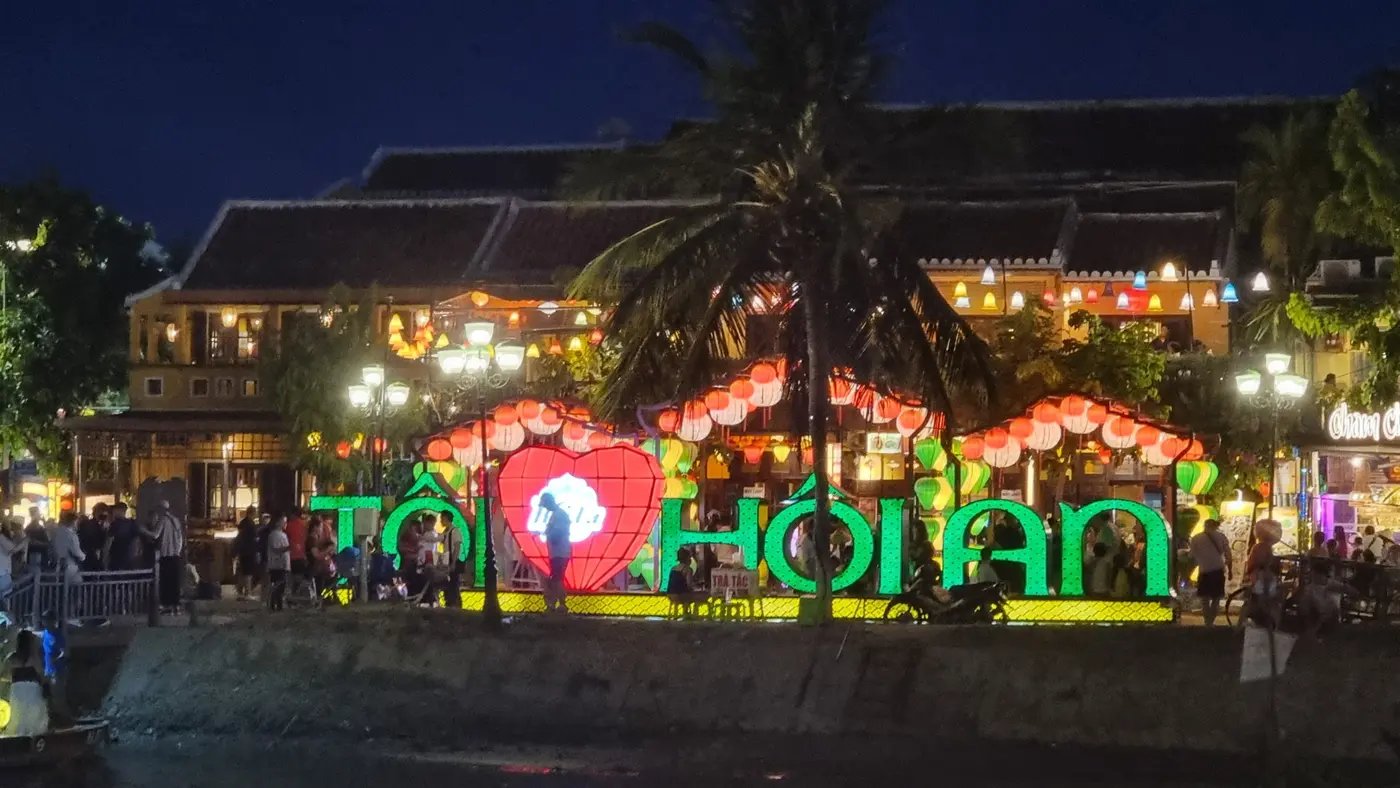
Day 7: Ancient Town and local food
Visit the market, old merchant houses, assembly halls and the Japanese Covered Bridge area. Break up the sightseeing with local dishes such as cao lau, white rose dumplings or mi Quang.
Early morning and late afternoon are often more pleasant than the busiest middle hours. If you want time outside the center, choose one bicycle ride, cooking class or countryside activity.
Days 8–9: Da Nang — City, Beach and Ba Na Hills
Da Nang deserves more than being treated as Hoi An’s airport. It offers a modern coastal-city experience, a long urban beach, strong food options and easier access to several of central Vietnam’s best-known attractions.
The transfer from Hoi An is short enough that changing hotels does not consume the day. Staying in Da Nang also makes the next domestic flight simpler.
Day 8: Marble Mountains, My Khe Beach and the city
Transfer from Hoi An after breakfast and leave your luggage at the hotel. Visit the Marble Mountains, a cluster of limestone hills with caves and pagodas, if the heat and your energy allow, then slow down at My Khe Beach or explore the riverside and cafés.
Da Nang becomes especially lively after dark, when the Han River waterfront, local restaurants, rooftop bars and beachside venues offer a different evening from lantern-lit Hoi An.
If Day 8 falls on a Friday, Saturday or Sunday, the Dragon Bridge currently performs its fire-and-water show at 9:00 p.m. Arrive early for a comfortable viewing spot and stand away from the dragon’s head if you do not want to get wet. Schedules can change during holidays and special events, so confirm the current time through the Da Nang tourism portal before going.

Day 9: Ba Na Hills and the Golden Bridge
Ba Na Hills is a full-day excursion best known for its cable cars, mountaintop complex and Golden Bridge. It is visually memorable and popular with first-time visitors, but it is also highly developed, often crowded and dependent on mountain weather.
Go if the Golden Bridge and theme-park-style experience appeal to you. Check the forecast, current ticket details and operating hours on the official Sun World Ba Na Hills website before visiting. Arrive early and allow a full day for the cable cars and attractions; conditions at altitude can be cooler or cloudier than in Da Nang.

If you would rather arrange transport and admission together, compare current Ba Na Hills tickets and tour options on Klook before choosing. Check what each option includes instead of comparing only the headline price.
If you prefer nature and a quieter day, skip Ba Na Hills and choose Son Tra Peninsula (a forested headland overlooking the coast), beach time and more of the city instead. Presenting both options is more honest than treating Ba Na Hills as essential for every traveler.
Central Vietnam does not follow exactly the same seasonal pattern as Hanoi or Ho Chi Minh City, so check the regional forecast before building the day around mountain views or beach weather.
Days 10–13: Ho Chi Minh City
Fly from Da Nang to Ho Chi Minh City. The final stop feels faster, newer and more spread out than Hanoi. The contrast is part of the value of travelling through Vietnam rather than staying in one region.
Day 10: Arrive and explore your neighborhood
After checking in, walk around central District 1 and Nguyen Hue (a broad pedestrian boulevard), or explore cafés and food streets close to your accommodation. Save the major museums for a full day when you have more time and energy.
Ho Chi Minh City has the strongest nightlife on this route. Bui Vien is the loud backpacker-party option, but it is only one side of the city; rooftop bars, cocktail bars, live music and late-night food streets offer very different evenings. Pick the atmosphere that suits you instead of assuming every night needs to center on Bui Vien.

Day 11: History and central sights
Choose a focused route through the War Remnants Museum, Independence Palace and nearby colonial-era landmarks. Some exhibits are emotionally heavy, so avoid treating this as a race between attractions.
In the evening, consider a food tour or explore another district rather than spending every night around the same central blocks.
Day 12: Choose one day trip
The Cu Chi Tunnels, a wartime underground network, and the Mekong Delta are both common excursions, but they offer very different experiences.
- Cu Chi Tunnels: better if modern history is your priority and you want a shorter, more focused excursion.
- Mekong Delta: better if you want waterways and rural scenery, but a quick group day trip can feel commercial and involves substantial driving.
Do not combine both in one long day just because a tour advertises it. Choose the experience that genuinely interests you.

Once you decide which trip fits you, compare Ho Chi Minh City tours and activities on Klook. Read the recent reviews and confirm pickup points, group size and what is included before booking.
Day 13: A slower final day
Leave the final full day open for shopping, cafés, markets, a cooking activity or neighborhoods you missed. It also provides a buffer if a domestic flight or earlier transfer changes.
A flexible final day is more useful than adding another distant excursion before an international departure.
Day 14: Departure
Allow generous time for the airport, especially during busy traffic periods. Confirm which terminal your airline uses and check baggage allowances before leaving the hotel.
If your international flight leaves early, stay in Ho Chi Minh City the previous night rather than attempting a same-day connection from another destination.
How to Travel Between the Stops
For a two-week trip, the goal is not to use every type of transport. It is to protect your limited time where long overland journeys add little value.
For intercity routes, Klook Transport and 12Go can help you compare selected trains, sleeper buses and vans. Availability and booking conditions vary, so check the operator, station or pickup point, baggage policy and total journey time before paying. For rail journeys, compare the result with the official Vietnam Railways booking website and book directly when it is practical.
Hanoi to Ninh Binh
Train, limousine van, bus and private transfer are all practical options. The journey generally takes a few hours, but door-to-door time depends on pickup points and your accommodation.
Ninh Binh to Hoi An
The most time-efficient route is usually a transfer to Hanoi’s airport, a domestic flight to Da Nang and a road transfer to Hoi An. Confirm the pickup time and baggage allowance with your transfer operator, especially if you are travelling directly from your hotel to the airport. An overnight train is possible for travelers who actively want the rail experience, but it uses more of the itinerary.
Hoi An to Da Nang
Hoi An and Da Nang are close enough for a straightforward road transfer. Actual travel time varies with your hotel locations and traffic, but this is the easiest hotel change in the itinerary.
Da Nang to Ho Chi Minh City
Fly from Da Nang. The train is more scenic but much slower, making it better for a longer trip than a focused 14-day route.
Vietnam’s official tourism site provides an overview of domestic flights, trains, buses and ferries. Always confirm current schedules and baggage conditions directly with the operator before payment.
For shorter rides inside the cities, Grab is widely useful for seeing the estimated fare and confirming the destination in the app. Download it before the trip and follow the airport or station signs to the designated pickup area; the official Grab Vietnam website explains the available services.
How Much Does Two Weeks in Vietnam Cost?
The following are broad planning estimates per person, excluding international flights. They are not fixed prices, and your route, room sharing, domestic flights and tours can change the total significantly.
| Travel style | Estimated daily spend | Approximate 14-day total |
|---|---|---|
| Budget | $35–55 | $490–770 |
| Mid-range | $70–120 | $980–1,680 |
| Comfortable | From $140 | From $1,960 |
These September 2026 planning ranges include accommodation, local meals, everyday transport and a reasonable activity allowance. Domestic flights, checked baggage, Ba Na Hills, an overnight cruise, private transfers, premium hotels or several guided excursions will raise the total.
Do not compare only hotel prices. Domestic baggage, airport transfers and tours can erase the saving from a cheaper room or flight.
Best Time for This Route
Vietnam’s long shape creates different weather patterns in the north, center and south. There is no single month that guarantees perfect conditions everywhere.
- North: Hanoi and Ninh Binh can be cool in winter and hot and wet in summer.
- Central Vietnam: Hoi An and Da Nang have their own wetter period, with heavy rain and storms possible in parts of the year. Mountain conditions at Ba Na Hills can also differ noticeably from the coast on the same day.
- South: Ho Chi Minh City stays warm, with a clearer dry and rainy-season pattern.
Vietnam’s official tourism guidance notes that March to May often offers a useful countrywide compromise, but you should still check each region rather than relying on one national forecast. See the official Vietnam weather and climate guide before finalizing the route.
Tet, the Vietnamese Lunar New Year, requires extra planning. In 2027, Tet begins on February 6, although the disruption usually extends across several days before and after it and the official holiday period is announced separately. Many people travel home, transport and accommodation can sell out, and some restaurants and businesses close for part of the holiday. Check the dates for your travel year; if they overlap with Tet, book the major transfers and hotels well in advance and confirm what will be operating.
Visa and Entry Planning
Entry rules depend on nationality and can change. Vietnam’s official electronic visa system states that e-visas can be valid for up to 90 days, with single or multiple entry, but some travelers qualify for visa-free entry under separate rules.
Check your passport on the official Vietnam e-visa website and the official tourism site’s visa requirements page. If you use an e-visa, make sure your intended airport or border point is on the approved entry and exit list.
Vietnam Immigration currently recommends completing its official pre-arrival form before entering the country. Check the official pre-arrival portal shortly before departure because the process and who needs to use it may change.
Avoid unofficial websites that imitate the government application page and charge unnecessary service fees.
Money and Mobile Data
Cards are useful in larger hotels, restaurants and shops, but cash remains important for markets, smaller businesses and local food. Carry a practical mix instead of relying completely on one payment method.
Withdraw or exchange enough for immediate needs, then compare rates and fees before making a larger transaction. Decline dynamic currency conversion when an ATM or card terminal offers to charge you in your home currency, unless you have checked that the displayed rate is genuinely better.
Mobile data makes ride-hailing, translation and itinerary changes easier. A local SIM can offer strong value, while an eSIM is convenient when you want service ready soon after arrival. If your phone supports it, you can compare Vietnam eSIM options through Airalo before the trip.
What to Remove for a Slower Trip
This itinerary is realistic, but it still covers a large part of the country. If you dislike frequent transport, remove one stop rather than shortening every stay.
- Skip Ninh Binh and add the nights to Hanoi and Hoi An.
- Skip Ho Chi Minh City and build a north-and-central trip.
- Skip Hanoi and Ninh Binh for a central-and-southern route.
- Keep Ninh Binh and skip the overnight bay cruise, or choose the cruise and skip Ninh Binh.
The right two-week itinerary is not the one with the most place names. It is the one that gives you enough time to experience the destinations you chose.
Why Hue, Sapa and Ha Giang Are Not in the Main Route
Hue, Sapa and Ha Giang can all justify a place in a Vietnam trip, but adding them here would either shorten the existing stays too far or create several more long transfers.
- Hue is the easiest addition for travelers focused on imperial history. Add it by extending the trip or removing nights elsewhere, not as a rushed stop between Hoi An and Da Nang.
- Sapa suits travelers who prioritize mountain scenery and trekking, but it requires extra travel from Hanoi.
- Ha Giang deserves several days and careful transport planning. It should not be reduced to a quick side trip simply to add the name to an itinerary.
The Mekong Delta remains an optional day trip in this focused route. If it is one of your priorities, give it an overnight stay and remove time from another stop rather than relying on a rushed group excursion.
Final Thoughts
For a first visit, Hanoi, Ninh Binh, Hoi An, Da Nang and Ho Chi Minh City create a balanced introduction to Vietnam’s cities, food, history, coast and landscapes. The route covers a lot of ground, but each stop has a distinct purpose rather than being added only because it is famous.
Book the long-distance flights and any overnight cruise first. Keep smaller activities flexible until the weather and your energy are clearer.