
How Many Days at Angkor Wat? 1, 2 or 3 Days
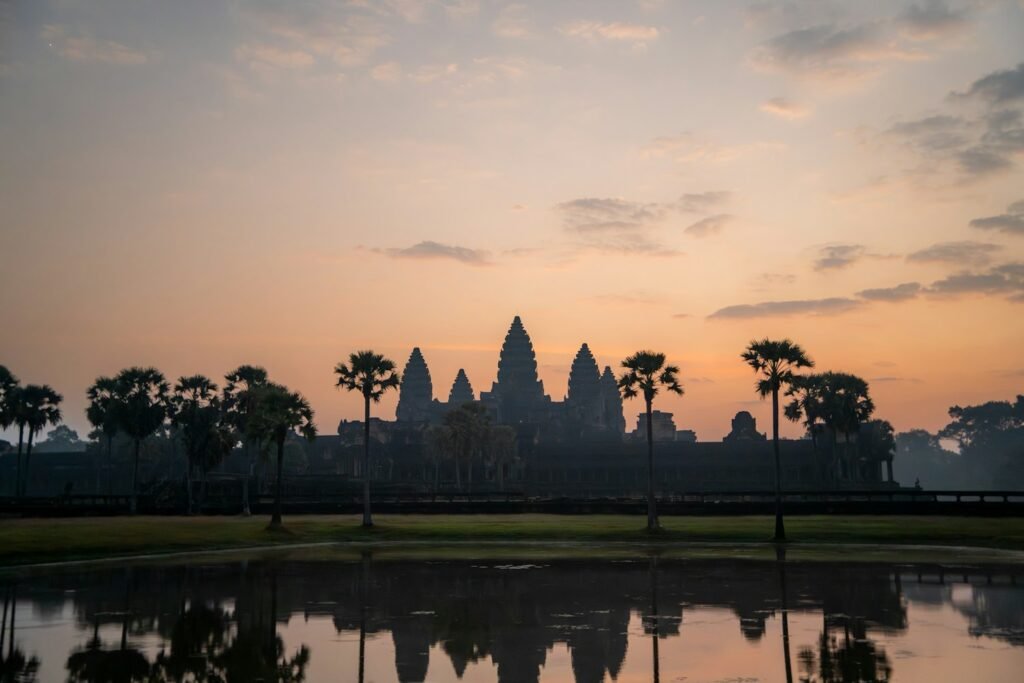
You can see Angkor’s famous temples in one day. The harder question is whether you want that to be one long day of moving between stops—or a visit with enough space to slow down.
For a first trip, I would choose two temple days if your route allows it. One works for the main sights; three makes sense if you enjoy archaeology, want an outlying temple or prefer shorter outings. The ticket name can be confusing: a two-day visit usually means buying the 3-day Angkor Pass.
This guide helps you choose the days you can actually use, then the pass, route and transport to match. Angkor Wat is one temple complex; the wider Angkor archaeological area around Siem Reap is what takes several days to explore.
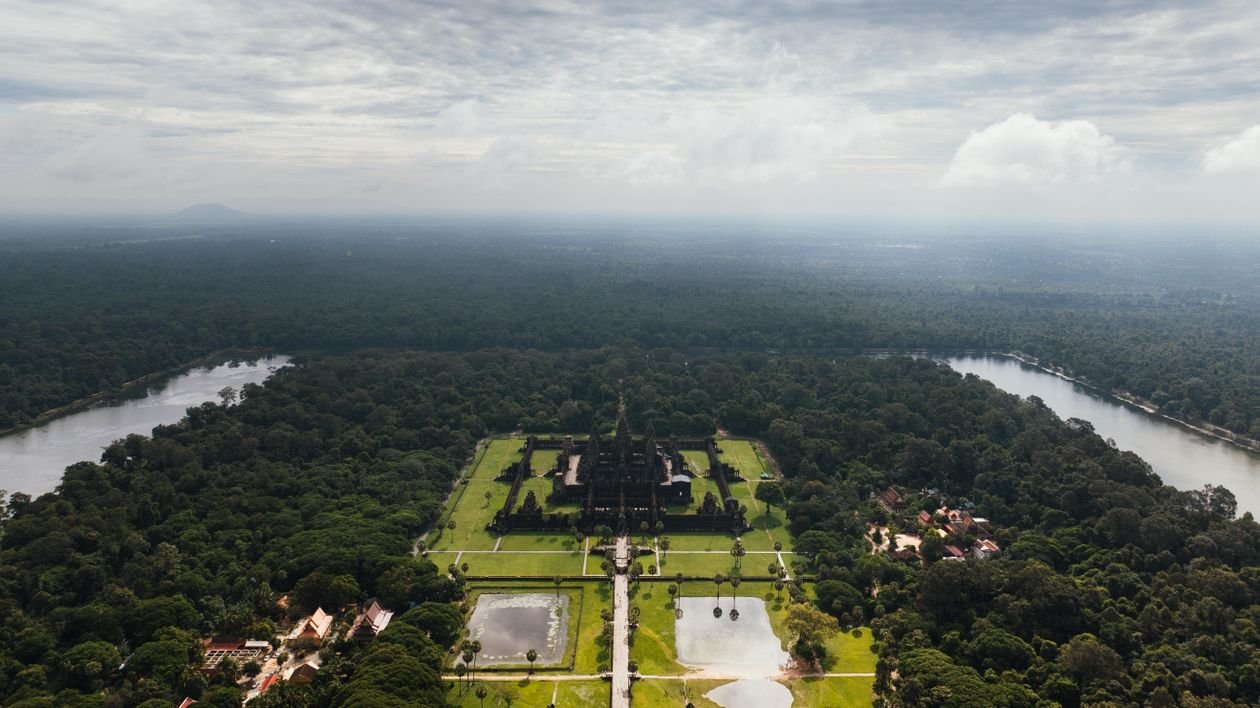
Angkor Wat alone covers about 163 hectares and is the world’s largest religious monument. The moat and grounds in the aerial view below help explain why even one temple deserves more than a quick stop.
This article contains affiliate links. If you book through them, we may earn a small commission at no extra cost to you.
The quick choice
One temple day: prioritise Angkor Wat, Bayon and Ta Prohm. Buy the $37 one-day pass.
Two temple days: add a selective Grand Circuit day and room to rest. Buy the $62 three-day pass, even if you only use two entries.
Three temple days: use the same $62 pass for a slower visit or an agreed outing to Banteay Srei. Another entry adds no admission cost, but another driver day still costs money.
If you only have one temple day and would rather have the pickup and route arranged, compare a guided Angkor day with hotel pickup. It can save you arranging transport and a guide separately; check the temples covered, pickup area and whether the Angkor Pass is included before booking.
In this guide
Count usable temple days
Choose your Angkor Pass
A focused one-day visit
Why I would choose two days
When a third day helps
What the extra day costs
Driver, guide or small-group tour?
Before you book
First, count the temple days you can actually use
Three nights in Siem Reap do not automatically give you three temple days. A late arrival, a road transfer from Phnom Penh and an early flight can leave just two full days between them.
Write down your arrival and departure times. Protect the full days in between, then decide whether any part of an arrival or departure day is genuinely usable. Include the hotel journey, bags and your next connection; do not make a final temple visit depend on getting back with minutes to spare.
For example, arriving Monday evening, staying Monday–Wednesday nights and leaving Thursday morning gives you Tuesday and Wednesday for Angkor. A three-day pass gives you two entries in that plan, not an extra morning that your flights do not provide.
With children, limited walking tolerance or a dislike of long hot days, two shorter outings may suit you better than one sunrise-to-sunset circuit. You still need a pass covering two visiting dates; a short visit is not a cheaper half-day ticket.
Arriving from Phnom Penh? See the Day 4 transport options in our Cambodia itinerary to compare a daytime bus with a private car and allow enough time before your first temple day.
Which Angkor Pass fits 1, 2 or 3 days?
Choose your pass by the number of dates you will enter the park. You can buy your Angkor Pass directly from Angkor Enterprise. Prices checked 26 November 2026; US dollars per paying visitor.
| Temple days | Pass | Admission | Use within |
|---|---|---|---|
| 1 day | 1-day pass | $37 | The ticket’s visiting day |
| 2 days | 3-day pass; use 2 entries | $62 | 7-day validity window |
| 3 days | 3-day pass; use all 3 | $62 | 7-day validity window |
| Temple days | Details |
|---|---|
| 1 day | Pass: 1-day passAdmission: $37Use within: The ticket’s visiting day |
| 2 days | Pass: 3-day pass; use 2 entriesAdmission: $62Use within: 7-day validity window |
| 3 days | Pass: 3-day pass; use all 3Admission: $62Use within: 7-day validity window |
There is no standard two-day pass in that list. Two one-day tickets would cost $74; the three-day pass costs $12 less. Moving from one temple day to two costs an extra $25 in admission per person, before transport or guiding.
The seven-day pass is $72, valid within 30 days. You do not need it simply because your Cambodia holiday lasts a week. Check the dates printed on your pass and keep every planned entry within its validity.
Children under 12 enter free; bring their passport as proof of age. You will need a portrait photo for a three- or seven-day pass. Have the pass ready before an early pickup so the day starts at the temples.
One day: choose the three main sights
If you have one day, make it a good one instead of trying to see the entire map. I would build it around three contrasting places:
- Angkor Wat: the familiar towers, long galleries and carved stories. Allow time to look beyond the reflection photo.
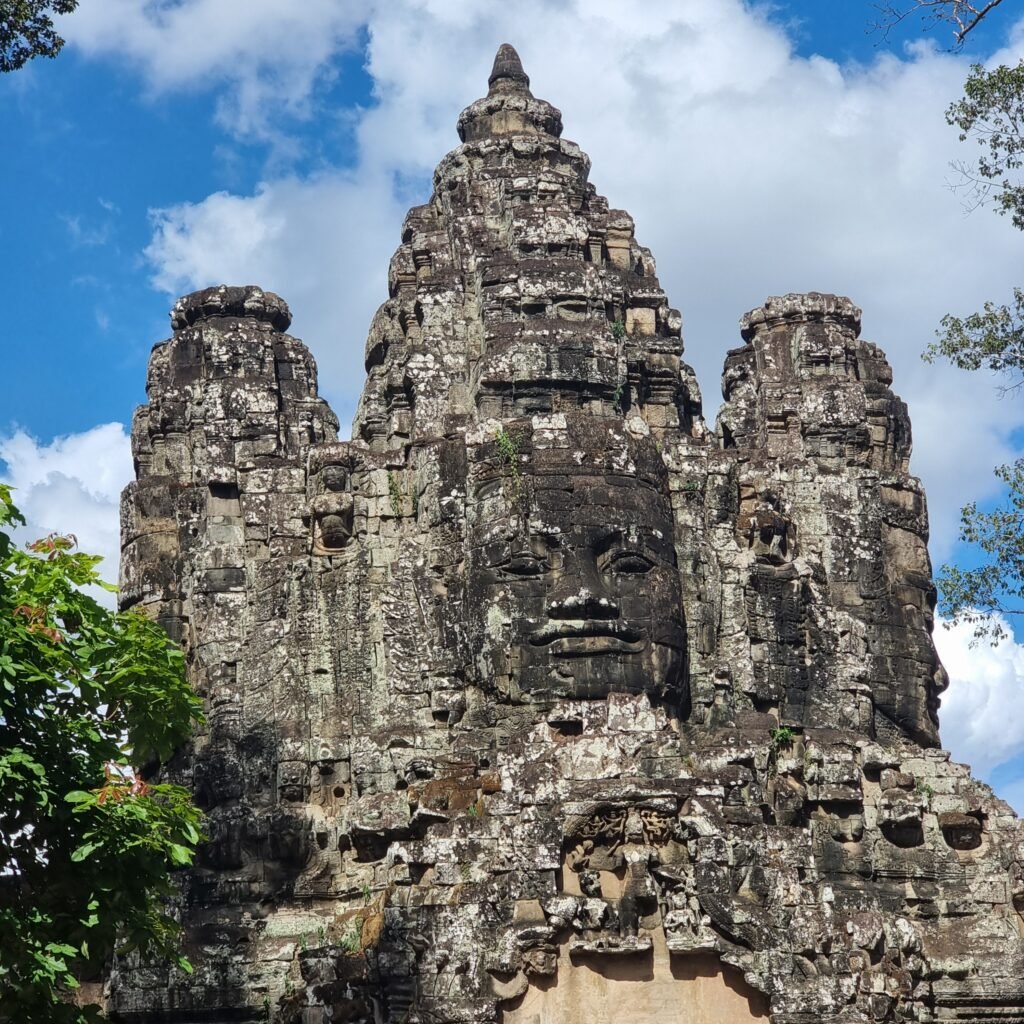
- Bayon: the temple with the great stone faces, inside the former city of Angkor Thom.
- Ta Prohm: tree roots wrapped around ancient walls, giving it a different feel from Angkor Wat.
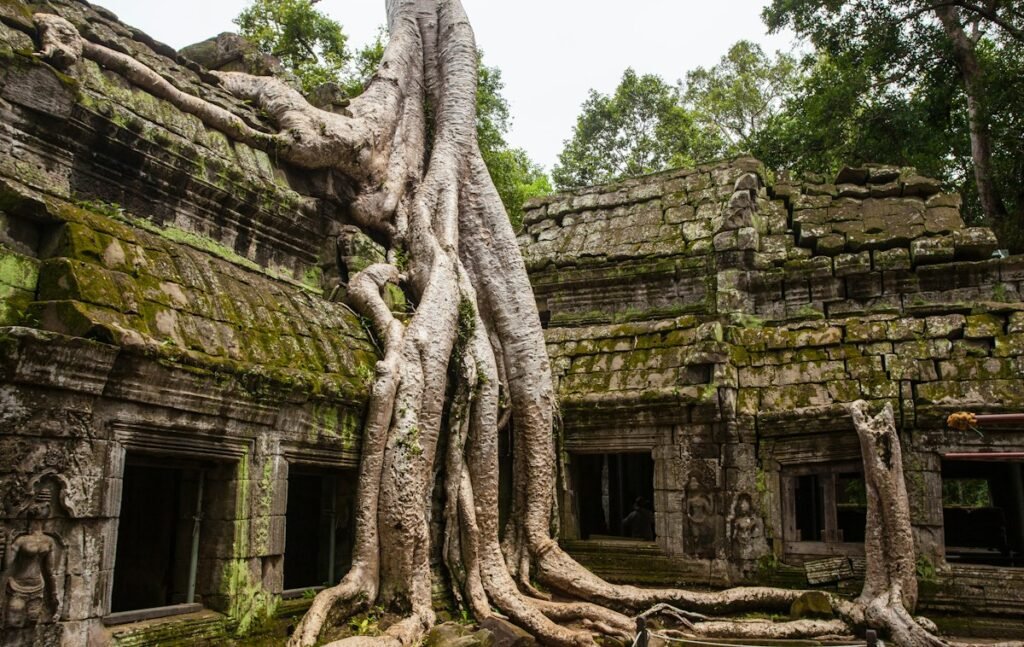
A workable outline is Angkor Wat early in the day, Bayon later in the morning, a proper lunch break, then Ta Prohm. This is a flexible sequence, not a guaranteed timetable. Your guide or driver can adjust the order around access, weather and your pace.
Sunrise can go at the start, but it means a much earlier day. Confirm pickup and breakfast arrangements beforehand. If you are already tired by lunch, skip the extra small temples rather than rushing the places you came to see.
I would not make sunset compulsory after that start. You can enjoy one temple day without collecting both ends of the daylight. If sunset matters more, discuss a later departure and a suitable final stop with your driver.
Two days: more time to understand what you are seeing
Two temple days are my preferred starting point for a first visit. Keep the main sights on day one and use day two for a different part of Angkor, rather than stretching the same checklist across another exhausting day.
Day 1: Angkor Wat, Bayon and Ta Prohm
Use the one-day outline above, with sunrise only if you want it. Leave space for explanations, photographs and a break. A guide is especially useful if this is your first introduction to Khmer history.
Day 2: a selective Grand Circuit
Begin with Preah Khan, a sprawling monastery and temple complex with corridors and courtyards to explore. Then choose a manageable combination with your driver: Neak Pean, a small island sanctuary, or Pre Rup, a Hindu temple with brick towers and stepped terraces. You do not need every stop on the circuit.
If you want a full day on the Grand Circuit, compare a private Grand Circuit tuk-tuk. The listed tour runs about 8½ hours. Check the stops and whether your package includes a guide, and budget separately for the Angkor Pass.
Keep the days different: one for the headline sights, the other for slower exploration. A smaller second-day route leaves room for a relaxed evening in Siem Reap.
With a longer stay, a rest day between visits can make the second outing more appealing. Keep the entries inside the pass’s seven-day window. A three-day pass gives you flexibility; it does not oblige you to spend every available day at temples.
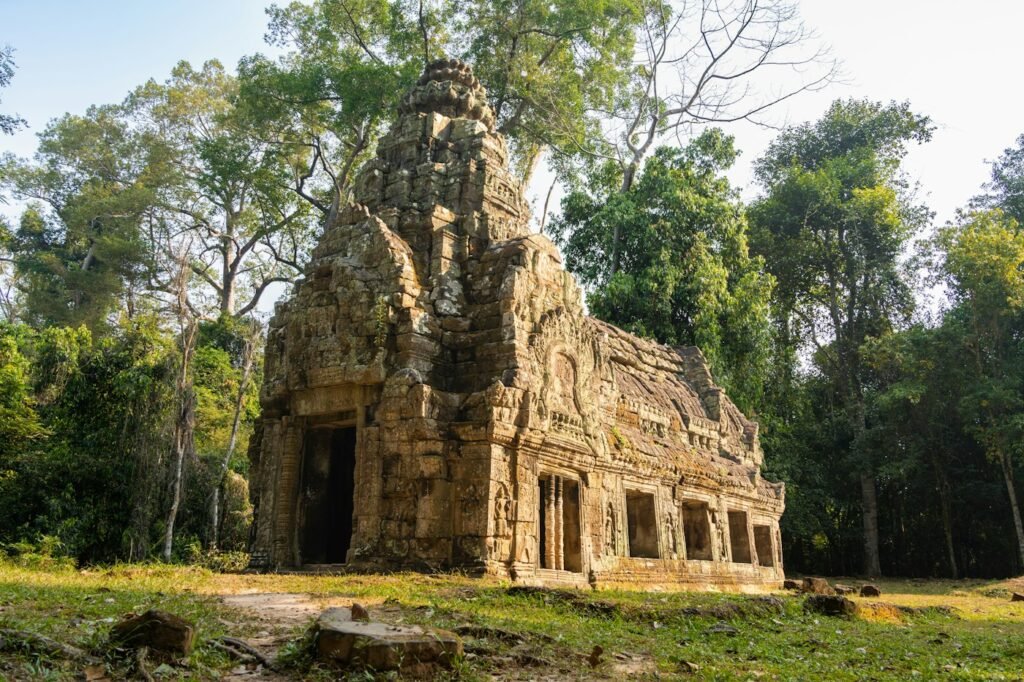
Three days: choose a reason for the extra visit
A third day is worthwhile when you can say what you want from it: more history, photography, a return to a favourite temple or shorter days throughout. “The ticket still has an entry left” is not, by itself, a reason to fill another day.
One option is Banteay Srei, a smaller pink-sandstone temple known for its detailed carvings. It lies beyond the central circuits, so agree the longer journey and whole route before booking transport. I would give it room instead of adding it after an already full Grand Circuit.
Alternatively, spread the central sights over three shorter outings: Angkor Wat on one day, Angkor Thom and Ta Prohm on another, then a selective Grand Circuit visit. That may be more useful than adding distance.
Do not assume every excursion from Siem Reap uses an Angkor entry. The official seller lists separate tickets for places such as Koh Ker. Ask about admission for the exact outing before using it as a reason to buy a longer Angkor Pass.
If you feel finished after two days, enjoy Siem Reap instead. You have not wasted the pass: it was already cheaper than two one-day tickets.
What does a second day really add to the cost?
Going from one temple day to two adds $25 in admission per paying visitor. The difference is the same whether you travel alone or share a vehicle:
| Temple admission only | One adult | Two adults total |
|---|---|---|
| 1 visiting day: 1-day pass | $37 | $74 |
| 2 or 3 visiting days: 3-day pass | $62 | $124 |
| Extra admission versus 1 day | $25 | $50 |
Transport and guiding are separate unless your booked package includes them. For a private driver, get a quote for each full route, including pickup, waiting and the return to your hotel. Check whether sunrise or a trip to Banteay Srei changes the price. Split the vehicle quote between your group, then add each person’s pass.
For a guided tour, compare the total for everyone travelling and check admission and transfers. If transport is included, count it once. If the pass is excluded, add $37 or $62 per paying visitor according to the days you need.
The third temple day adds no admission cost when you already have a valid three-day pass. It can still add another transport day, guiding and meals. Choose it because you want the visit, rather than treating the unused entry as a free outing.
A driver gets you there; a guide adds the history
The preparation I would give more time to is the history. I visited with a guide, yet came away wishing I had read more beforehand. Understanding the carvings and the people behind these places would matter more to me on a return visit than adding more stops.
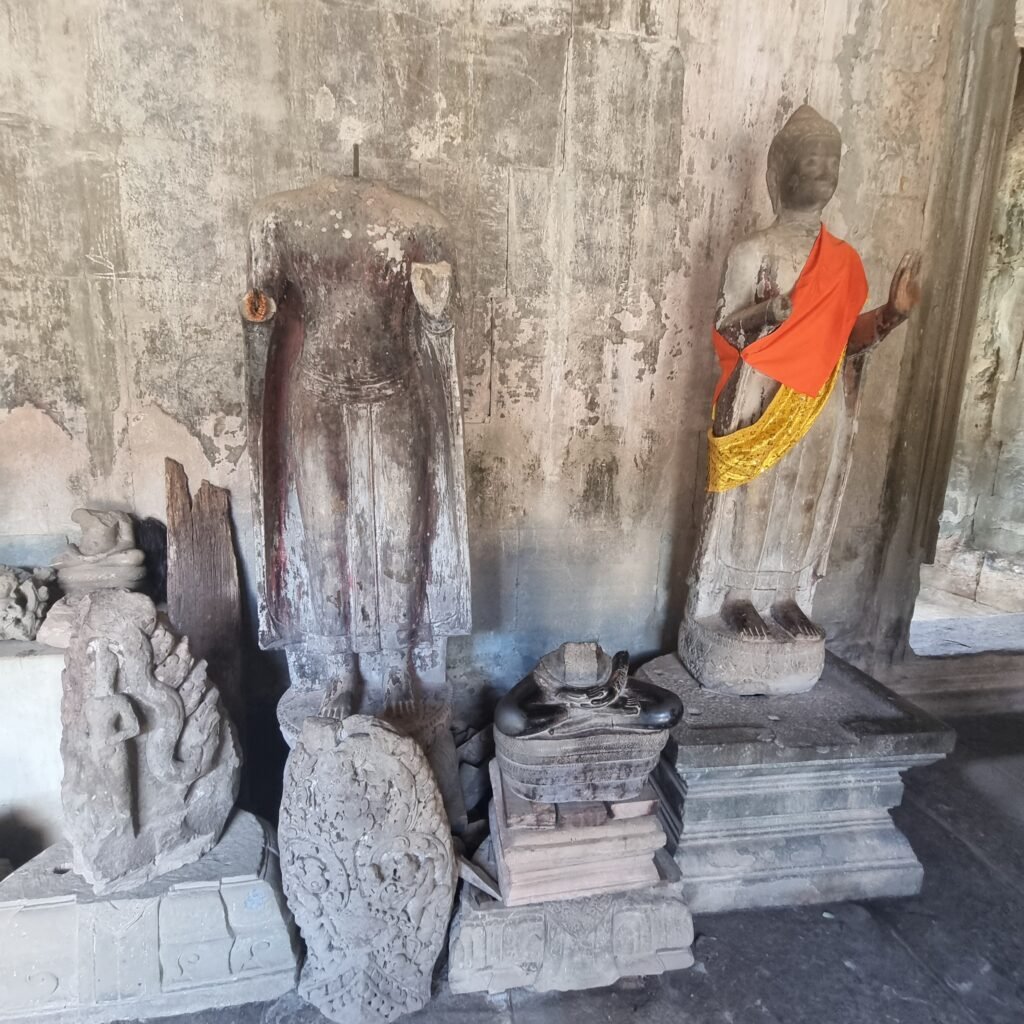
The temples also changed with the rulers and beliefs of their time. Bayon was transformed from a Buddhist sanctuary into a Hindu temple under Jayavarman VIII, losing much of its religious imagery before later returning to Buddhist worship. That history gives damaged sculptures another layer of meaning, although a missing head alone does not tell us when or why a particular statue was damaged.
A private tuk-tuk with a driver suits a flexible route and people sharing transport. Confirm meeting points and waiting time; do not assume a driver provides guided explanations inside the temples.
If you want someone to arrange the early pickup, plan the route and explain the temples, compare a guided Angkor day with hotel pickup on Klook. The linked product has small-group and private choices. Select Join-in for the shared option and Pick up if you need hotel collection; check your date, language, temples and admission inclusions before paying.
Book now and save 20% on eligible English-language group sunrise tours with a meeting-point departure. Offer ends 30 November 2026.
A shared tour can suit a solo visitor, but you follow its pace and route. Private transport is more flexible for breaks and shorter outings. Compare the full group total and inclusions, rather than a headline tour price against a driver-only quote.
Before you book: details that can change your plan
Choose an early stop that is open. Angkor Wat opens at 5:00 am and closes at 5:30 pm. The upper Bakan level has its own hours and closes on Buddhist holy days. Preah Khan and Ta Prohm open at 7:30 am and close at 5:30 pm. Confirm current access before setting the route; the park’s overall entry window does not mean every temple opens at dawn.
Prepare for walking and sacred sites. Wear shoes you can walk in, bring water, cover shoulders and knees, and follow signs and staff instructions. You can skip steep upper sections and still enjoy the wider temples.
An arrival-evening sunset can be a bonus. If you buy a one-day ticket for tomorrow after 4:45 pm, you can also enter for sunset that evening. Confirm the date when purchasing, and leave time for the ride to the site. It gives you an evening visit, not another full temple day.
Choose the stay around the visit. For one temple day, settle in the previous evening. For two, protect two usable dates before your onward journey. For three, make sure the extra time is something you want at Angkor rather than time borrowed from an essential transfer.
My choice would be two temple days with the three-day pass, a guide for the main sights and an unhurried second outing. With only one day, I would still go—just choose the main temples and enjoy them properly.
If you are still choosing which countries to combine, our first-trip Southeast Asia comparison puts Cambodia alongside the other options.